
What is the Embodied Resilience Pain Recovery Method, actually?
Embodied Resilience is a method of coaching designed for long-term pain recovery.

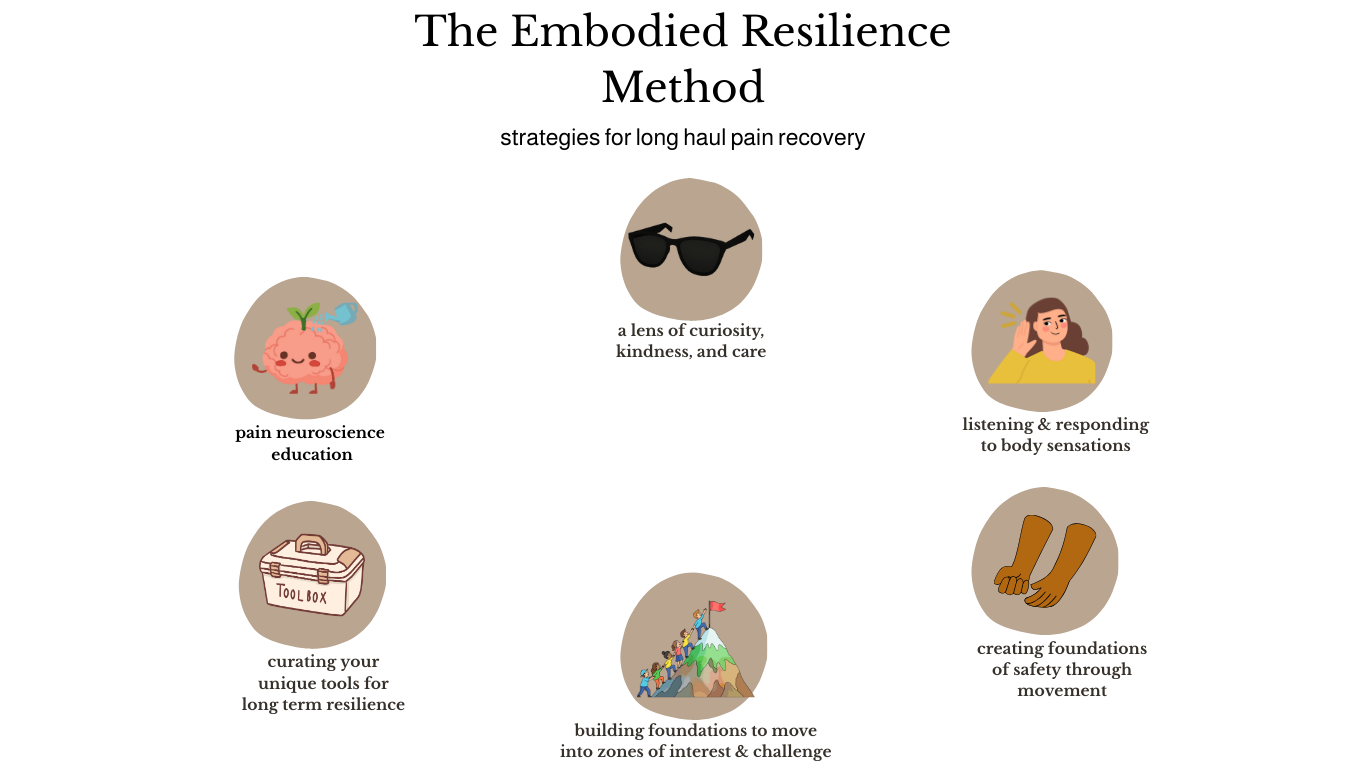
The Embodied Resilience Method utilizes somatic, biomechanical, and cognitive strategies to reconnect to body signals and re-establish a lived experience of safety, thus minimizing pain cycles and increasing long term physical and psychological resilience.
Embodied Resilience is unique in that it resists a generic protocol and instead strengthens an individual's intuitive understanding of their body, its needs, and its capacity for change.
Using a foundation of pain neuroscience research, Embodied Resilience empowers clients with an understanding of their physiology – i.e. what exactly is happening when they experience pain in the short and long term. What sets the ER approach apart is its focus on somatic integration. This includes the skill of being with oneself fully, connecting to bodymind emotions, and ultimately, moving those emotions through the body.
Embodied Resilience also integrates physical therapeutic movement to allow clients to sequentially build strength, mobility, and felt safety in activities that are meaningful to them.
Using the Embodied Resilience approach, you'll learn how to connect with your body on a physical, energetic, and emotional level. With curiosity, kindness, and care, you'll learn practices that are unique to you for the long term.
-
Embodied Resilience is not talk therapy, and Cait is not a psychotherapist. As an occupational therapist, yoga teacher, and coach, Cait’s Embodied Resilience approach is one that blends Pain Reprocessing Therapy and specific biomechanical expertise with somatic integration.
-
Sessions can vary in their content, but we will always begin with a grounding exercise to get into the body and create specific intentions for our time together.
Since these goals are client-driven, we may spend more time talking about specific strategies (like creating time for ourselves, or the neurology of one’s pain experience) or creating foundations of safety via specific therapeutic movement. Most often, there is a combination of both!
-
That depends! Many people find that the Embodied Resilience method is what is missing in their care. Sometimes this means that folks can cut down on other supports, while others maintain relationships with traditional talk and physical therapists as well. Every brain and body is different.
-
Every case is unique. With that being said, most folks with complex pain begin to effectively integrate Embodied Resilience strategies within several weeks, which creates a meaningful improvement in quality of life.
How long we work together is up to you. The majority of clients work with Cait for at least 3-6 months.
